
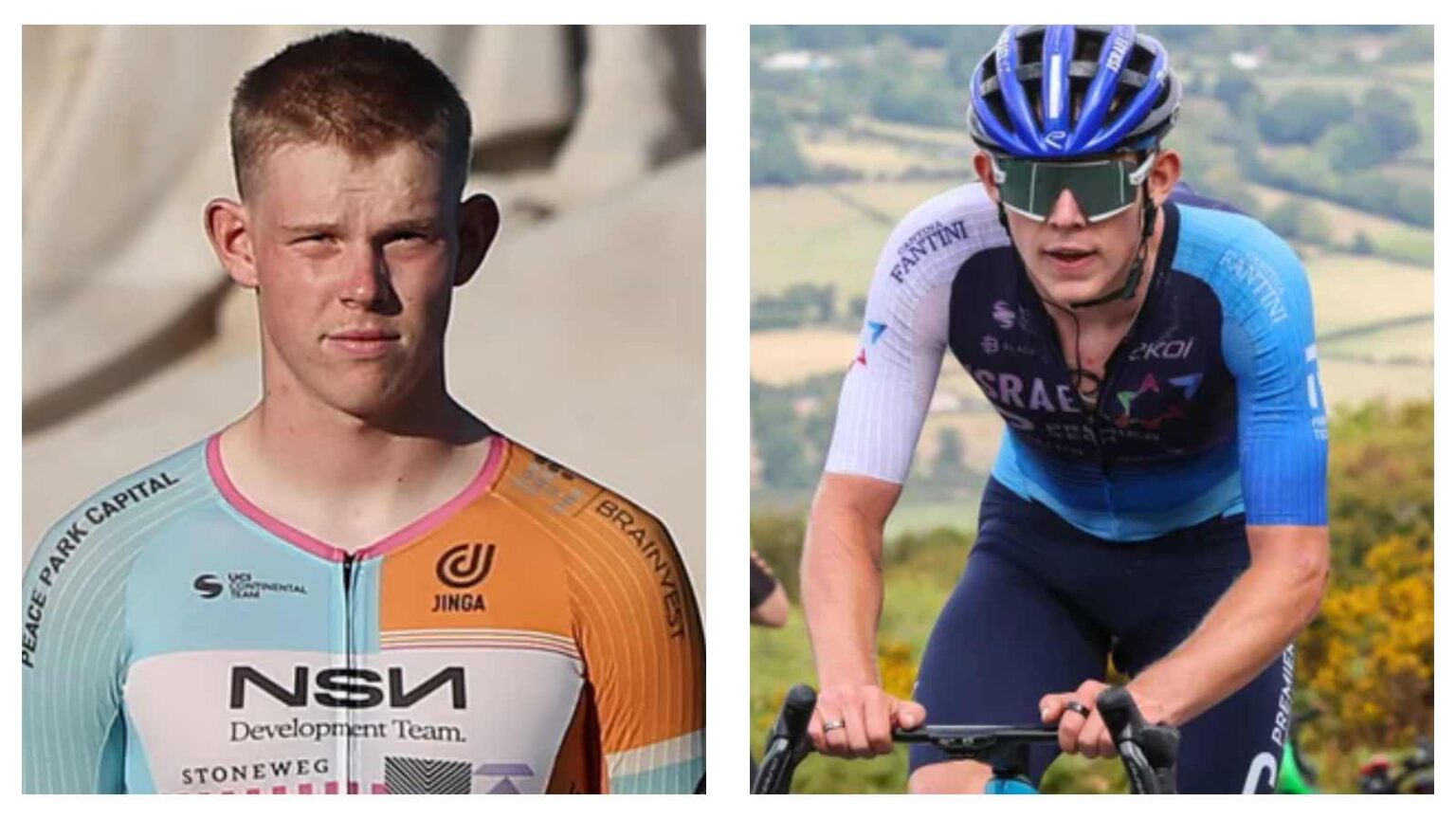
Three days after the death of 19-year-old Welsh cyclist Finlay Tarling during a road race and the cycling world still asks, why did this happen?
Tarling was participating in the Volta a Portugal under the NSN Development Team when he collided with a non-race vehicle on Friday. He did not survive his injuries.
The incident shocked the whole cycling community, but more than the outpouring of grief, it reignited questions about the state of safety in cycling.
Investigation underway
An investigation into the incident has already been launched by the Guarda Nacional Republicana (GNR), Portugal’s National Republican Guard and military police.
According to GNR spokesperson Carlos Canatário, who clarified some details about the incident in an interview with RTP, Tarling was trying to catch up with the peloton on a downhill section during stage eight of the race on Friday.
The GNR police escort, he said, could not “keep up with Tarling”.
The “broom” wagon – the last car in the race that signified the end of the convoy and the rolling road closure – was also behind him.
At the same time, further ahead, the vehicle involved in the incident was parked at the roadside, waiting for the race to pass.
The driver reportedly asked bystanders if the race was over and if he could join the road, and then drove on the route before the broom wagon had passed.
“In that specific location, we know there were no officers present because it was not one of the locations prioritised in the assessment that had been carried out,” Catanario was quoted as saying by The Guardian.
“The vehicle was going in the opposite direction to the direction of the race. The cyclist [Tarling] cut across the curve on the left lane – as is natural, as [racing] cyclists do – and that is what caused the cyclist and the vehicle to collide.”
Police affirmed the investigation will continue.

Cycling community mourns
Organisers decided to neutralise stage eight of Volta a Portugal, while the NSN team pulled out of the race on Saturday.
As a tribute to Tarling, the leader’s jersey colour was changed to black, while the peloton wore armbands as the race continued on until Sunday.
Other races, such as the Czech Tour and the Arctic Race of Norway, also paid tribute to Tarling.
Tarling’s father, Michael, thanked everyone for their messages of support in a social media post on Sunday, which he said helped them deal with the “hardest couple of days of our lives”.
“Hearing how lovingly and fondly Fin was thought of has been a huge help to us.
“I don’t know how we carry on from here, but we’ll figure it out with the support of all our family, friends, and community.
“Whilst our broken hearts will never be fixed, he was not only our son and brother but our best mate. Gentle, loving with the driest sense of humour, we will miss him terribly.”
Fury over rider safety
More than the grief, the incident also triggered fury among the cycling community, opening up conversations and calls over rider safety.
The riders’ union Cyclistes Professionnels Associés (CPA) was particularly furious.
“We are speechless and filled with anger after the news of Finlay Tarling’s death at the Tour of Portugal,” the CPA said in a post.
“It is not right that a young athlete’s life should end this way, and we are furious that even today it is still not possible to prevent such serious accidents.”
Union president Adam Hansen told BBC Sport there was also a need for better helmet safety, especially as riders and cycling in general continue to produce record-breaking numbers.
“Bike helmets only need to meet standard testing like all helmets, EU standard CE EN 1078 is only rated for 19.5km/h and I do not believe this is enough for road racing,” he said.