
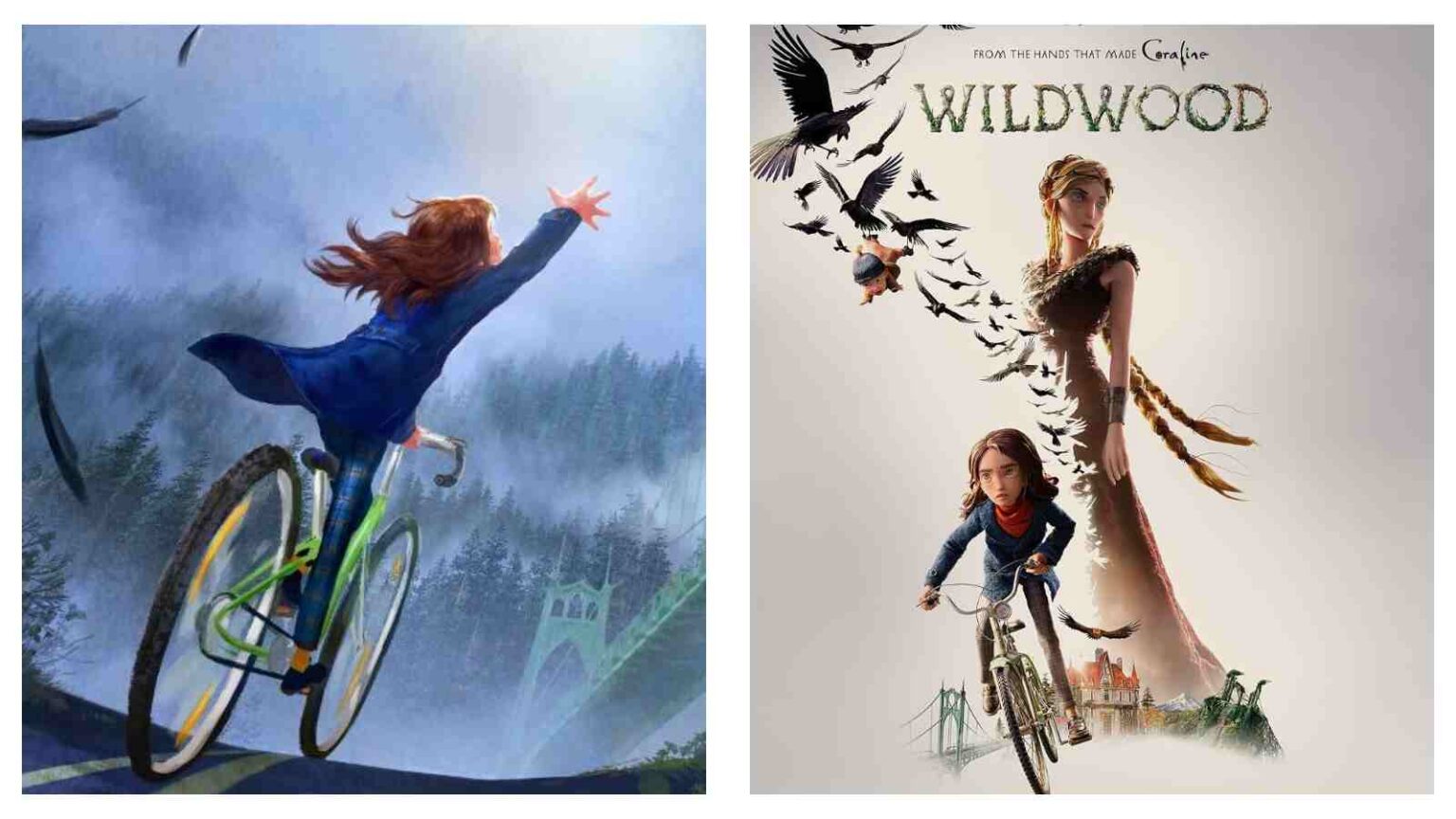
Animation studio Laika has spent years creating the magical world of Wildwood. Now, that wilderness is ready to come to life in the upcoming film, which will release worldwide on October 23.
Imagine a forbidden forest filled with talking animals and mysterious creatures. That is the world of Wildwood, which connects Portland, Oregon, with a place known as the “Impassable Wilderness,” where magic rules.
However, the film offers more than fantasy and wonder. At its heart, Wildwood explores deeply human themes through a story shaped by years of painstaking stop-motion work.
From book to screen
Laika recently released the official trailer for Wildwood. The fantasy adventure follows Prue McKeel, voiced by Peyton Elizabeth Lee, as she enters an enchanted forest to rescue her baby brother.
Crows abduct Prue’s brother, forcing her to begin a dangerous journey into the wilderness.
Along the way, she encounters talking animals, rival factions and a grieving mother who holds several secrets.
The film adapts the first book in Colin Meloy’s Wildwood Chronicles. Meloy, the frontman of rock band The Decemberists, created the original story.
Laika President and CEO Travis Knight discussed the adaptation at the Annecy International Animation Film Festival. The festival featured a special presentation of the upcoming movie.
“I’m a huge fantasy nerd… I read ‘The Lord of Rings’ when I was a child and loved it,” Knight said, according to Deadline.
“This story felt like it breathed that same air, but it was very specific because it was set in Portland, where I’m from, and it reimagined Portland as this sort of fantasy realm.”
Love and loss at its core
Laika describes Wildwood as a story about “love, loss, sacrifice, and secrets.” The film also explores the many forms that magic can take.
Prue enters the unknown to save her brother. Her journey raises a powerful question: How far would you go for someone you love?
“It’s also very emotional at the core. It felt like the perfect combination of a big fantasy epic and something that was very intimate,” Knight said.
Knight first saw the story before Meloy had finished writing the book. He immediately wanted to bring it to the big screen.
Meloy had one condition. He asked Knight not to release the film before the books.
That request suited Knight’s vision for the project. He wanted to tell the story through stop-motion, an art form that can take years to complete.
‘From the hands that created Coraline’
Laika has built a strong reputation in animation through its distinctive stop-motion filmmaking.
The studio made its mark with Coraline in 2009. Since then, Laika has released several acclaimed stop-motion films, including ParaNorman (2012), The Boxtrolls (2014), Kubo and the Two Strings (2016) and Missing Link (2019).
In an exclusive featurette for Entertainment Weekly, Knight explained why stop-motion remains so special to the studio.
“Everything you see is hand-made, and has been crafted by somebody,” he said.
He also explained how the studio’s technology and techniques have evolved since Coraline.
“Things that used to feel like they were virtually impossible back on ‘Coraline’ now we do as a matter of course.”
Knight believes that progress helped the team create Wildwood, which he described as Laika’s most ambitious project yet.
“And that all led us to the film that we’re currently in production on now, Wildwood, which is the most expansive, the most ambitious, the most epic film we’ve ever done.”
An act of rebellion
The film’s handmade approach feels especially relevant as artificial intelligence continues to change filmmaking.
Knight sees something magical in the connection between audiences and Laika’s stop-motion characters. Although animators create the characters from materials such as silicone and plastic, viewers can still connect with the people behind them.
“At a time when entire worlds can be built with a click of a mouse and videos generated from a prompt, choosing to make a stop-motion film feels like a quiet act of rebellion.”
That human touch gives Wildwood a distinctive appeal. Every character, set and visual element reflects the work of artists and animators.
As the film brings its enchanted wilderness to the screen, it also celebrates the value of handmade filmmaking.
Perhaps, then, a little bit of Wildwood exists beyond our own doorsteps. We may simply need to know where to look.